
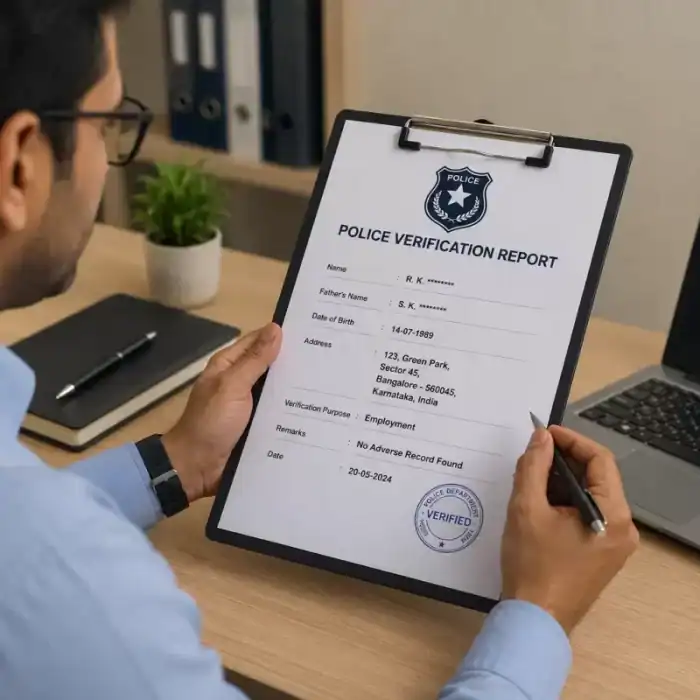
If you run a retail store, you already know that your employees are the face of your business. They handle cash, deal with customers, and often have access to the stockroom. So before you hire someone, it makes sense to know who you're actually bringing into your team. That's where a police verification check comes in.A police verification check is simply a way to confirm that a person doesn't have a criminal background that could put your business, your staff, or your customers at risk. It sounds like a small step, but in retail, it makes a big difference.Why Retail Stores Need This More Than Other Businesses
Retail is different from a lot of other industries. Your employees are constantly in touch with money, products, and people. Think about it:- Cashiers handle cash and card payments all day.
- Store staff have access to expensive inventory.
- Delivery boys often go to customers’ homes.
- Employees sometimes have access to customer details like phone numbers and addresses.
Now imagine hiring someone without knowing their background, and something goes wrong. A theft, a fight with a customer, or worse. This is exactly why police verification for employees should never be skipped in retail hiring.
What Happens If You Skip It
A lot of small and mid-sized retail businesses skip this step because they think it's just extra paperwork or it slows down hiring. But skipping it can actually cost more in the long run.- Theft and stealing – A huge part of retail losses every year happen because of employees, not outside shoplifters.
- Trust issues – If something goes wrong, customers lose trust in your brand, and that’s hard to get back.
- Safety concerns – Employees interact with all kinds of customers, including elderly people, women, and children. You want to be sure they’re safe.
- Legal trouble – In many cities, certain retail businesses are legally required to get employees verified, especially if they work night shifts or handle valuable products like electronics or jewellery.
So skipping this step isn't really saving time. It's just pushing the risk further down the road.How a Police Verification Check Works
The process is actually simple these days. Here's how it usually goes:ID Check – The employee's name, address, and ID proof are confirmed.Criminal Record Check – The police records are checked to see if there's any criminal history.Address Check – Sometimes the current or permanent address is verified, either through documents or a visit.Verification Report – Once everything is checked, a report or certificate is issued confirming the person is clear.
It usually takes a few days to a couple of weeks. You can either go through the police station directly, or use a verification agency that handles the whole process for you, which is what most retail businesses prefer today since it's faster and easier.Fullscan - India's First AI-Powered BGV Platform
No more slow background checks. Fullscan’s AI-powered platform verifies candidates in hours, not weeks, backed by real expertise, so you hire with confidence.
It's Not About Distrust
Some employers worry that asking for a police verification check might make new hires feel like they're not trusted. But honestly, most employees understand it's just a standard hiring step, not a personal attack. In fact, it works both ways. Employees also feel safer knowing their coworkers have been checked too.

Think of it like a basic safety net. It protects the business, but it also protects everyone working there.
Make It Part of Your Hiring Process
The smartest way to do this is to make police verification a normal part of your hiring checklist, right alongside document collection and reference checks. That way, it doesn't slow down your hiring. By the time someone is ready to join, their verification is already done or close to done.

Whether you run one store or a chain of stores across cities, this simple step can save you from a lot of trouble later. It shows customers you take their safety seriously, and it shows employees that you run a responsible business.
Final Thoughts
A police verification check isn't about doubting people. It's about being careful. In retail, where employees handle money, products, and customers every single day, this step is too important to skip. Making police verification for employees a regular part of your hiring process is one of the easiest ways to protect your store, your team, and your customers.Get fast, reliable police verification checks for your retail employees and protect your store from day one Contact us today
FAQs
Is police verification legally required for retail employees, or is it optional?
It depends on the city and the type of store. Some municipal corporations make it mandatory for retail staff who work night shifts or handle high-value goods like electronics or jewellery. Even where it's not legally mandatory, most established retail chains do it anyway because the risk of skipping it usually outweighs the cost of doing it. Can we onboard an employee before their verification report comes back?
Technically yes, but it's not something we'd recommend, especially for roles that involve handling cash or customer access. A safer approach is to complete document and reference checks upfront so verification is either done or nearly done by the time the person is ready to join. What happens if an employee's verification comes back with a flag?
It doesn't automatically mean rejection. The report gives you the facts, but the hiring decision is still yours. A lot of businesses use it as one input alongside interviews and reference checks rather than an automatic disqualifier, especially for minor or old issues. Does police verification cover employees who've worked in a different city or state?
Yes, it can, though it usually takes a bit longer since records may need to be pulled from a different jurisdiction. If you're hiring across multiple cities, using an agency that handles pan-India verification saves you from chasing different police stations yourself.